
Condotta Giovanni Rebora · Mapping the territory
The producers recommended by Slow Food Genova
Farms and artisan food producers in the province of Genoa and nearby areas, visited and selected by the Slow Food Genova community. A catalogue that grows as each entry is checked.
142 producers · Genoa and surroundings
Filters
142 producers
Ape Contessa
Genoa and surroundings · Genova
The name comes from the place: Monte Contessa, on the heights of Sestri Ponente, a green lung rising behind one of the most industrial neighbourhoods of Genoa. Here, among woods, terraces and scrub, the bees of Ape Contessa find the wild flowerings of the hills of western Genoa. Ape Contessa is a small beekeeping business tied to this territory. It shows that even a few steps from shipyards and the airport nature holds on, and that bees are its first guardians. Choosing the honey of a beekeeper from the neighbourhood means supporting someone who looks after the bees and the green around the city, and tasting a product that tells of the flowers on our heights.
Apicoltura Parco Naturale delle Mura – Mauro Grella
Genoa and surroundings · Genova
Above Genoa run the seventeenth-century Mura Nuove, dotted with forts and surrounded by woods, meadows and Mediterranean scrub: this is the Parco delle Mura, one of the great green lungs of the city. Right here, on the heights of Sampierdarena, work the bees of Mauro Grella. His hives are in a unique setting, where the military history of the city meets wild nature. The bees forage on wild flowerings far from intensive farming, a few minutes from the centre and the port. It is urban beekeeping in the best sense: an outpost of biodiversity at the edge of the city, which reminds us how much nature the hills of Genoa still hold. Choosing the honey of the Parco delle Mura means supporting a local beekeeper and bringing to the table the taste of the flowers that grow between the forts of Genoa.
 Apicoltura Varni Elio
Genoa and surroundings · Genova
For 25 years Elio Varni has devoted himself to a single trade, beekeeping, and he does it by following the bees to where nature offers the best. His base is in the Valpolcevera, behind Genoa, but his hives travel with the seasons. In winter the bees rest near the sea, sheltered from the cold. In spring the nomadic season begins: the hives are taken to the areas best suited to each flowering, up to the heart of the Parco dell'Antola. Up there, among beech woods, chestnut groves and high pastures far from intensive farming and pollution, come the farm's finest honeys. Following the flowerings means knowing the territory well: knowing when the acacia blooms in the valleys, when the chestnut, when the lime tree or the heather. It is tiring, patient work, made of night-time moves and constant attention to the health of the bee colonies. But it is also the only way to obtain single-flower honeys that truly tell of a place and a season. All production is certified organic. From Varni's hives come acacia, chestnut, lime, heather, honeydew and dandelion honeys, together with pollen and royal jelly. The quality is recognised: the farm is among the producers of the "Miele del Parco" brand of the Antola and in 2024 it won 2 golden bees at the Mieli dei Parchi della Liguria competition. Choosing Varni's honey means supporting beekeeping done by hand, which protects the bees and values the protected areas of the Genoese Apennines.
Azienda Agricola Genta
Genoa and surroundings · Genova
In Prà, Emanuele Genta's farm grows Genoese basil all year round in greenhouses, with more than two hundred years of family history behind it. The seasons bring courgettes and tomatoes, cucumbers in summer, cabbages and beetroot in winter: the same land, different crops.
Azienda Agricola R & C. Di Rossi Ruggero
Genoa and surroundings · Genova
In Prà, where basil is at home, Ruggero Rossi and Annamaria Carrea have grown Basilico Genovese DOP since 1992: seedlings in open field, picked by hand one by one, with the root. Solar panels, biomass and organic fertilisers keep the environmental impact low.
Azienda Agricola Tresgal
Genoa and surroundings · Genova
In Campo Ligure, Paola Righeschi has raised hens, chickens, rabbits and pigs organically since 2003. The Tresgal farm processes the meat itself: since 2015 it has had the only ASL-certified poultry slaughterhouse in Liguria, for chickens, rabbits and white Livornese hens.

Contadini della Vesima
Genoa and surroundings · Genova
Between Cogoleto and Genoa, the Contadini della Vesima sell boxes of seasonal vegetables picked on the day: you order online from Thursday to Friday, and delivery is on Saturday. The product list changes every week, according to what the fields really give.

Gli Orti di Staglieno
Genoa and surroundings · Genova
In Staglieno, father Bernardo worked the family terraces from 1952, between factory shifts. Some help with the olive harvest turned into a trade: today, with Annalisa, he picks seasonal fruit and vegetables, ICEA organic certified, and delivers to homes in the evening.

La tabacca
Genoa and surroundings · Genova
In the hills of Genova Voltri, La Tabacca is an ecological and social farm: it grows vegetables of local varieties, restores a farmhouse using green building methods and runs paths of inclusion and training. In the kitchen, zero-kilometre ingredients, flowers and wild herbs from the woods.

Macelli44 – Macelleria biologica e Agri-bistrot
Genoa and surroundings · Genova
Via dei Macelli di Soziglia, in the old town of Genoa. Organic meat from free-range pasture, handmade cured meats, offal, aged meat and farm cooking. Macelli44 is the direct shop of the Cooperativa Agricola Monte di Capenardo, which has raised free-range cattle in the mountains of Davagna, behind Genoa, since 1983. Opened in 2015, it was the first organic butcher's shop in the city. The shop is in via dei Macelli di Soziglia, the caruggio that for centuries housed the stalls of Genoa's butchers. A votive shrine put up in 1724 by their guild is a reminder of this. The meat comes from the cooperative's Limousine cattle, which live on pasture all year round, and from other small sustainable farms: organic pigs and chickens. There are also eggs and a stock of meat dry-aged for up to 120 days. The butchers work the whole animal as they once did, from boning to preparing the counter, and try to use every part, "from nose to tail". Tripe and offal are on sale. In the charcuterie workshop, cured meats are made without nitrites, nitrates or chemical preservatives. The butcher's shop is for people who want to eat less meat, but good meat produced responsibly. In 2021 the cooperative took over the space of the neighbouring fishmonger, which was about to become a laundrette, and opened the agri-bistrot there. At lunch, aperitivo and dinner you can eat the meat from the farm, including the less noble cuts and the fifth quarter. It is served with vegetables, cheeses, farm beers and wines from small farms in inland Liguria.
Maltus Faber
Genoa and surroundings · Genova
In Fegino, Genoa, Maltus Faber has made craft beer since 2008, on the site where the Cervisia factory stood in the early twentieth century. Bottle-conditioned, Belgian style: saison, blanche, amber. On the premises, a permanent exhibition tells the story of Genoese beer.
Tutti giù per terra
Genoa and surroundings · Genova
In Genoa, overlooking the sea, Senad Hrustic founded the social farm Tutti giù per terra in 2015: seven and a half hectares of vegetable gardens, olive trees and livestock. It is an educational farm with pet therapy and a sensory path, where contact with the land becomes a form of care too.
Azienda Agricola "Il Pulcino"
Polcevera valley · Serra Riccò
Il Pulcino began with a brave choice: to change life, set fears and uncertainties aside and start again from the land. In Serra Riccò, on the hills of the Valpolcevera, Giovanna Mele and her family have created a farm that aims to pass on love for nature and animals, the values their family has always been built on. They farm respecting the rhythms and needs of the land. Fruit and vegetables are seasonal, grown locally and naturally, without pesticides or GMOs. It is work, they say, that tests you every day, but pays back with the wonder of watching what you sowed grow. Grandmother Maria's old recipe books guide the family along the way. From them come the farm's preserves and prepared foods, with the idea of bringing back the flavours of the past and those generous, unforgettable meals at home. The name itself tells a family story: "Pulcino" is little granddaughter Nicole, who appears with grandmother Maria on every product. In a valley marked by industry and big infrastructure, Il Pulcino shows that farming can still find room at the gates of the city, and that the hills of the Valpolcevera can produce good food again. Choosing the products of Il Pulcino means supporting a young family farm that has bet on the land and on home cooking.

Azienda Agricola Canigea
Polcevera valley · Torrazza
In Torrazza, on the hills of Sant'Olcese, Canigea farms one hectare of land: seasonal fruit and vegetables, eggs, care of the soil. A community farming project, open to anyone who wants to take part with their time or their hands, among vegetable gardens, workshops and farming culture.

Azienda Agricola Il Mezzano
Polcevera valley · Serra Riccò
Gianpaolo Risso runs Il Mezzano with his family, in Serra Riccò: about ten hectares of meadow and as many of woodland. Here livestock farming is a way of keeping the land going: the cattle turn into meat and cured meats a forage that would otherwise be of no use. This is why he chose the cabannina: it grazes on its own and eats more forage than other breeds. It is a choice that has a cost. The cabannina is not a beef breed, and pushing growth with feed does not pay, so the animals are raised until they are well over eighteen, twenty months old.
Not to be missed: Razza bovina cabannina
Azienda Agricola “Gli Artisti”
Polcevera valley · Campomorone
In Campomorone, two Genoese musicians, Daniele Franchi and Margherita Sandi, grow vegetables with natural methods and raise free-range hens. Since 2023 they also keep dairy sheep, for handmade cheeses and yogurt without preservatives: a farm born from a change of life.

Zafferano Dei Giovi
Polcevera valley · Mignanego
At Giovi, on the old Via del Sale, Zafferano dei Giovi grows saffron on grandfather Giovanni's land, using certified organic methods. The flowers are picked at dawn, before the bees visit them, and the stigmas are dried within twelve hours of harvest.
Macelli44 – Cooperativa Agricola Monte di Capenardo
Bisagno valley · Capenardo
Livestock farm at Capenardo, Davagna, in the mountains behind Genoa. Butcher's shop and agri-bistrot in via dei Macelli di Soziglia, in the old town. Organic beef from free-range pasture, cured meats without preservatives, pigs, chickens and eggs. The Cooperativa Agricola Monte di Capenardo was founded in 1983 in Davagna, when twenty members began to raise cattle and horses free-range. The aim was to make abandoned land productive again. The fields, once cultivated, had become wild and nobody mowed them any more: the woodland had to be stopped from taking over. Today it is one of the largest farms in the province of Genoa. It raises about 150 head of cattle, ICEA-certified organic, which live outdoors all year round on more than 200 hectares of pasture and woodland. The breed is Limousine, a hardy breed chosen after a trial of extensive farming in nearby Bavari. The animals eat grass and receive neither antibiotics nor GMOs. The farm can be visited at any time, but it is best to let them know if you want to meet the people who work there. In 1998 the cooperative was the first in Liguria to deliver family meat boxes to the door. In 2015 it opened Macelli44, the first organic butcher's shop in Genoa, in via dei Macelli di Soziglia. This is the historic caruggio of the meat shops, where a votive shrine from 1724 recalls the butchers' guild. Besides the meat from its own farm, the shop sells meat from other small sustainable farms. The butchers still work "a bottega", from boning to the counter, and nothing of the animal is wasted. Tripe and offal are sold, and in the charcuterie workshop cured meats are made without nitrites, nitrates or other preservatives. There is also a stock of meat dry-aged for up to 120 days. The shop openly addresses people who want to eat less meat but of good quality: flexitarians, "reducers" and even some vegetarians who buy it for others. Since 2021, in place of the old fish shop next door, there is the agri-bistrot. The kitchen uses the cooperative's meat together with vegetables, cheeses, farm beers and wines from small farms in inland Liguria.
Zafferano di Rosso
Bisagno valley · Piane di Rosso
At Piane di Rosso, above Davagna, Daniel Fida has grown saffron since 2010. He is the only saffron producer in Liguria and one of very few in Italy. He farms naturally, with no fertilisers, and has added bay, rosemary and rhubarb to the saffron, in a project that began with two friends and that he now continues alone.
A Çimma
Scrivia valley · Montoggio
In Montoggio, Paolo Castagnola and Laura raise cabannina cows on pasture, since 2012. From their raw milk, without industrial ferments, come formaggetta and prescinsêua: two products of the Slow Food Presidium of the cabannina cattle breed.
Not to be missed: Razza bovina cabannina

Autra
Scrivia valley · Savignone
In Autra, between Savignone and the Val Brevenna, the Bagnasco family has been reclaiming abandoned land since the early 1980s. Goats and cabannina cows graze among oak and chestnut woods; the milk becomes formaggette, caprini and ricotta in the farm dairy.
Not to be missed: Sciroppo di rose · Razza bovina cabannina
Azienda Agricola Artemisia
Scrivia valley · Montoggio
A very small farm since 2009, growing local crops by natural methods.
Not to be missed: Sciroppo di rose
Birriciclo Plurale
Scrivia valley · Montoggio
In Montoggio, in the Alta Valle Scrivia, Federico Giuffra founded the Plurale brewery in 2013, after a period in New York among the pioneers of American craft beer. Since 2016 he has brewed on his own, with head brewer Riccardo: golden ale, India pale ale, weizen and other styles.
Birrificio La Superba
Scrivia valley · Busalla
Busalla, Valle Scrivia, Genoese hinterland. Raw craft beers, bottom- and top-fermented. The Birrificio La Superba was founded in 2010, when Andrea Mura began production after years of training in the beer world around Italy. The name is a tribute to Genoa and takes up the epithet Petrarch gave the city in 1358. The brewery, however, began in Busalla, a hill village on the banks of the Scrivia. Today Andrea, Luca and Serena work there. The plant has a 10-hectolitre brewhouse and an average output of about 700 hectolitres a year. The beers are raw, that is neither pasteurised nor filtered, and free of additives and preservatives. The brewery joins modern technology to old brewing culture and prefers low-temperature brewing to keep aromas and flavours. It says it uses genuine or zero-kilometre ingredients. The cereals too, it explains, are harvested in the Valle Scrivia or neighbouring valleys. For flavouring it uses ingredients from Liguria, from basil to rose petals. Among its specialities is a basil beer, a flavour that immediately recalls Genoa. The range starts from classic German, English and Belgian styles and adds products tied to the territory. It includes, among others, a chestnut beer, a double-malt amber, a stout, a weiss and the labels Genova, Caea, Regina, Serena, Marylin and Puro Sangue. The beers are drunk on tap at the Scialleria, the brewery's pub in Busalla, where they are also ingredients in several recipes. They can also be bought from the online shop.
Cascina Salvega di Ottonello Rita
Scrivia valley · Casella
In Casella, in the Val Scrivia, Rita Ottonello has grown old roses for syrup, a Slow Food Presidium, since 2004. She raises chamois-coloured goats, sheep, hens and bees, and offers guided visits among chestnut woods and paths: you can also arrive on the historic Casella train.

Casone
Scrivia valley · Savignone
In Savignone, Chiara Mirolo raises Cabannina cattle, registered with the Slow Food Presidium for the Cabannina breed. A small farm in the Genoese hinterland that looks after a native Ligurian breed, hardy and suited to mountain pasture.
Not to be missed: Razza bovina cabannina · Cabannina cattle breed
Fabbrica Birra Busalla
Scrivia valley · Savignone
In Savignone, near the Busalla motorway exit, the Fabbrica di Birra Busalla reopened in 1999 in the same building where beer was made between 1905 and 1929: the first Ligurian microbrewery. Only water, malt and selected hops, no pasteurisation; among the beers, Castagnasca made with chestnuts.
 Gli Orti di Cortino
Scrivia valley · Casella
In Cortino, above Casella, Gli Orti di Cortino grow seasonal fruit and vegetables organically, together with wild forest fruits. In the workshop they make preserves, chickpea and maize flour, cider and wild apple vinegar: processing that extends the life of the garden.
I Crosi
Scrivia valley · Valbrevenna
In Crosi, an abandoned village in the Valbrevenna, Emanuele Capra moved alone at the age of nineteen. Since 2000, when the first Crosa heifer arrived, he has raised Cabannina cattle: today the milk becomes cheese following the Slow Food Presidium protocol.
Not to be missed: Razza bovina cabannina

Il Giardino delle Dalie
Scrivia valley · Savignone
Not to be missed: Sciroppo di rose
Azienda Agricola I Piani
Stura valley · Masone
In Masone, in the Parco del Beigua, the cows of the I Piani farm graze freely among grass, flowers and wild herbs, and the milk changes flavour with the seasons. Since 2008 the farm has made cow's and goat's milk cheeses and welcomes visitors at weekends, by reservation.
Dalpian Il Sottobosco
Stura valley · Tiglieto
In Tiglieto, on the edge of the Parco del Beigua, Luca Dalpian picks wild berries — blueberries, raspberries, blackberries, wild strawberries — using organic methods. The rose syrup is a Slow Food Presidium; mushrooms, vegetables and undergrowth produce become preserves, sauces and mostarde.
Not to be missed: Chinotto di Savona · Sciroppo di rose
A Butega du Maxela di Biggi Valentina
Trebbia valley · Torriglia

Azienda Agricola Michele Ravera
Trebbia valley · Rovegno
In the upper Val Trebbia, in Rovegno, Michele Ravera grows old varieties of potato — kennebec, désirée, quarantina, cannellina nera — and stone-ground cereals. He takes part in the Slow Grains campaign "Tutta farina del nostro sacco", together with other producers of the Genoese Apennines.
Not to be missed: Sciroppo di rose
Azienda Agricola Obbi Apicoltura
Trebbia valley · Torriglia
In Torriglia, in the upper Val Trebbia, the Obbi farm keeps bees using organic methods. A small farm in the Genoese hinterland, among the woods of the Apennines, where the bees work far from traffic and intensive farming.

Azienda Agricola Mooretti
Aveto valley · Allegrezze
In Allegrezze, above Santo Stefano d'Aveto, in the Val d'Aveto, Massimo Monteverde raises mountain animals and grows old varieties of potato. In the farm dairy he makes cheeses and yogurt; flour and potatoes join the direct sales, which reach the Tigullio and Genoa every Friday.
Azienda agricola Mulino di gramizza
Aveto valley · gramizza
On the Gramizza stream, in the Val d'Aveto, a mill from the 1950s still grinds wheat, maize and chestnuts with the power of water. The farm grows potatoes, onions and vegetables on about fifteen hectares and raises Piemontese cattle, grazing from spring to autumn.
Villa Rocca
Aveto valley · Rezzoaglio
In Rezzoaglio, the Villa Rocca farm grows the Quarantina potato and produces maize flour. Since 2009 it has kept about five hundred old potato varieties from all over the world: a catalogue field that opens to the public every year at the end of September, together with the Parco dell'Aveto.

Azienda Agricola Solari Carmela
Fontanabuona valley · San Colombano Certenoli
In Pian dei Cunei, in the Val Fontanabuona, Giancarlo Aveggio grows the native grape Cimix for wine, together with extra virgin olive oil, saffron and Ligurian basil. He receives by appointment anyone who wants to get to know the products of this corner of the Genoese hinterland.
Inta costa
Fontanabuona valley · Cassanesi
In Cassanesi, a hamlet of Tribogna, inland from the Golfo Paradiso, an organic farm works the land following the principles of organic farming. A small local farm, whose story still needs to be told more closely.

Az. Agr. Dolce Fiorita
Tigullio · Rapallo
On the hills above Rapallo, Simone Altemani raises saanen goats and cabannina cows and makes fresh and aged cheeses, yogurt and caprino. Gambero Rosso has listed him among the best Italian cheeses. No chemicals, with care for the animals and the land.
Azienda Agricola Orseggi
Tigullio · Lavagna
In Lavagna, the Raggio family has grown olive trees since 1997: from an initial two hectares there are now six, with two thousand four hundred trees of lavagnina, razzola and rossese. Its DOP Riviera Ligure oil won the Sirena d'Oro in Sorrento in 2005. Educational farm and agriturismo.

Azienda Agricola Radical Farmhouse
Tigullio · Lavagna
In Lavagna, a few steps from the sea, Segundo Achinelli and Caterina Ravano grow a regenerative garden: few hand tools, minimal soil work, companion planting following old techniques. They cook for their guests with the harvest, often over an open fire.
Fescion Farmers
Tigullio · Rapallo
In San Massimo di Rapallo, Fabio Costantini farms land worked before by his father and grandfather: seasonal vegetables on terraces, bees, goats, donkeys and Cabannina cattle, using organic methods. He also tells the story of farm work online, to people who do not know it up close.
Galhop
Tigullio · Rapallo
In San Massimo di Rapallo, the brewery Galhop has grown its own hops since 2014 for a zero-kilometre beer. Beside Bang, Splash and Flop, the "Random" beers experiment: one with hay from the Cabanne in the Val d'Aveto, another with chestnut honey.
azienda agricola Tomato de Ma'
Tigullio · Lavagna
In Lavagna, the farm Tomato de Ma' grows tomatoes and seasonal vegetables, with direct sale on the farm. A small family-run business, in the Tigullio hinterland that slopes down to the gulf, land historically suited to gardens and olive groves.
Apemario
Sturla valley · Borzonasca
In the Val Fontanabuona, Annalisa, Davide, Diego and Federico keep bees, united by the choice of a simpler life, far from the rhythms of the city. The Apemario project grows from the care of bees and from the wish for a different model of development.
Cooperativa Agricola Rurale Isola di Borgonovo
Sturla valley · Mezzanego
In Mezzanego, in the Val Fontanabuona, the Cooperativa Isola di Borgonovo makes DOP Riviera Ligure extra virgin olive oil and Misto Chiavari hazelnut cream in its own mill, opened in 2005. It brings abandoned olive and hazelnut groves back into use through the "Adotta un ulivo" project.
Vincavacca
Sturla valley · Borzonasca
In Borzonasca, the Vincavacca farm raises Cabannina cattle, a Slow Food Presidium breed. They graze between the Val Sturla and the Val d'Aveto from March to December, and eat local organic forage in winter. The milk is small in quantity but good in quality, and it is the base for cheeses that reach important kitchens too.
Not to be missed: Razza bovina cabannina
Azienda Agricola Costa de Zerli
Graveglia valley · Ne
In Costa di Zerli, in the municipality of Ne, the farm grows the Zerli red onion and the quarantina potato, both traditional agri-food products of the Val d'Aveto, together with chestnut flour, wine and spirits. A long-established family business, it is one of the producers of the Parco dell'Aveto.
L'arca di Noema
Graveglia valley · Ne
In Ne, in the Val Graveglia, Alessandro Rossetti raises Cabannina cattle and turns their milk into cheese. The farm is one of the producers of the Slow Food Presidium for the Cabannina breed and also welcomes guests as an agriturismo.
Not to be missed: Razza bovina cabannina

La Ricolla
Graveglia valley · Ne
In Ne, in the Val Fontanabuona, Daniele Parma makes wine using the biodynamic method: observing natural cycles, spontaneous fermentation, ageing in terracotta amphorae. Since 2020 he has been part of the Triple A family. The wines have names in Genoese dialect: Berette, Òua, Toseo, Sarvego.
 Azienda Agricola Il Mulino di Barry
Val Petronio and eastern coast · Castiglione Chiavarese
In the beautiful Val Petronio, in Castiglione Chiavarese, Marco and Barbara farm 9 hectares of terraced land: only 1 hectare of vineyard, 2 of olive grove, and the rest divided between orchard, arable land and woodland. From native varieties such as Bianchetta Genovese, Vermentino and Ciliegiolo they make DOC Golfo del Tigullio-Portofino wines. Since 2021 they have been the first in Liguria to close their whole production with screw caps. The name comes from the mill that ground wheat at the end of the 1800s. Grandfather Beppin bought it in the 1950s, and today it is the home and winery of this young couple, who believe in their territory with love and dedication.
Azienda Agricola LIGGIA DU MARE'
Val Petronio and eastern coast · Sestri Levante
In Sestri Levante, the Liggia du Marè farm raises sheep and goats: the milk becomes ricotta and cheese following local tradition. Beside the livestock it looks after olive trees and a vegetable garden. A small family business on the Tigullio coast, between sea and hinterland.
Azienda Agricola La Canonica Baxaicò
Val Petronio and eastern coast · Castiglione Chiavarese
In Castiglione Chiavarese, Andrea and Enrica grow basil seedlings and turn them into pesto in their restaurant, La Calanca, in Sestri Levante. The name, La Canonica, comes from the place where Andrea's father-in-law, who arrived from Carro in the 1930s, sold farm produce.
Azienda Agricola Tassisto Pietro
Val Petronio and eastern coast · Casarza Ligure
In Casarza Ligure, Pietro Tassisto raises Cabannina cattle, the native Ligurian breed protected by the Slow Food Presidium. A small herd, grazing and milk processing keep alive a livestock tradition that was at risk of disappearing.
Not to be missed: Razza bovina cabannina

Agriturismo Il Filo di Paglia
Vara valley and Cinque Terre · Pavareto
In Pavareto, in the upper Val di Vara, chef Marco Azaghi left the restaurants of the Tigullio to become a livestock farmer, a pork butcher and a cheesemaker. Il Filo di Paglia produces meat, raw-milk cheeses, organic vegetables, home-made pasta and bread: the whole chain is within the farm.
Not to be missed: Razza bovina cabannina
Antico Albergo Amici
Vara valley and Cinque Terre · Varese Ligure
In Varese Ligure, the Antico Albergo Amici is one of the two places that still make croxetti according to tradition, a Slow Food Presidium: the coin-shaped pasta, decorated with hand-carved wooden stamps, which the groom's father once gave to his daughter-in-law.
Not to be missed: Croxetti di Varese Ligure

Azienda Agricola I Cerri
Vara valley and Cinque Terre · Carro
In Carro, in the Val di Vara, the Cerri family has grown vines since the early 1980s. Today they farm three hectares of albarola, vermentino and ciliegiolo, without pesticides or weedkillers, fertilised with manure from the livestock farmers of the upper valley. The cellar, built in 2014, is less than a kilometre from the rows.
L'Osteria Du Chicchinettu
Vara valley and Cinque Terre · Varese Ligure
In Varese Ligure, in piazza Mazzini, the Osteria Du Chicchinettu makes croxetti, a Slow Food Presidium: pasta made with flour, egg yolk and warm water, then stamped by hand, one side at a time, with wooden stamps handed down in the family. It is served with meat sauce, marjoram or pesto.
Not to be missed: Croxetti di Varese Ligure
Laboratorio Picetti
Vara valley and Cinque Terre · Varese Ligure
In Varese Ligure, Alessandra and Monica Picetti carve by hand the wooden stamps for croxetti, the coin-shaped pasta that is a Slow Food Presidium. They carry on the workshop of their father Pietro, who died in 2020: each stamp reproduces coats of arms, rosettes or ears of wheat, following designs handed down for generations.
Not to be missed: Croxetti di Varese Ligure

Taverna del Vara
Vara valley and Cinque Terre · Torza
In Torza, in the municipality of Maissana, Taverna del Vara has made craft beer since 2015, in the family house where fizzy drinks used to be bottled. Since 2014 it has grown its own hops, now about a thousand plants between Cascade and Chinook. It is part of the Biodistretto della Val di Vara.
Azienda Agricola Biologica e Biodinamica Stella di Lemmen
Cinque Terre · Riomaggiore
Azienda Agricola Cian Cianin
Cinque Terre · Riomaggiore
In dialect "cian cianin" means "slowly, slowly", and it is the philosophy of the whole farm. Cian Cianin was born in 2018 from the dream of Margherita Barberotti and Valentina Melani, who describe themselves as biodynamic winemakers and enterprising dreamers. Their project is to recover, with slowness and respect, the abandoned vineyards and land on the heights above Riomaggiore, to give value back to the territory and its farming tradition. In the Cinque Terre every recovered vineyard is a piece of landscape coming back to life: dry-stone walls rebuilt, terraces won back from woodland and brambles, land that without care would slide towards the sea. In the vineyard they have worked organically from the beginning, and after a period of study the farm moved to biodynamic farming. They use green manure, grass cover, natural fertilisation and biodynamic preparations, with sulphur and reduced amounts of copper. In the cellar, too, intervention is minimal. Fermentations are spontaneous, without temperature control; filtering and fining are done only when needed, and sulphur dioxide is kept to a minimum. The aim is to accompany the wine in its development as gently as possible, keeping its character and vitality. Among the labels are the white Aut Aut, the rosé Velia and Contatto. Choosing the wines of Cian Cianin means supporting two young winemakers who, one step at a time, are giving life back to the terraces of the Cinque Terre.

Azienda Agricola Possa
Cinque Terre · Riomaggiore
Not to be missed: Cinque Terre Sciacchetrà
Azienda Agricola Riccardo Fino
Cinque Terre · Riomaggiore
Not to be missed: Cinque Terre Sciacchetrà

Azienda Agricola Vétua
Cinque Terre · Monterosso al Mare
Monterosso al Mare, Cinque Terre National Park. White wines from native grape varieties, Sciacchetrà and a red. Vétua began in 2010 in Monterosso, on the hill of Vettora, which in dialect is called Vétua. For generations it was one of the areas that produced the most Cinque Terre DOC wine. The farm began after three ancient native grape varieties, Piccabùn, Frappelà and Brujapagià, were found and recovered in collaboration with the CNR. At the base of the project is the idea that farming knowledge should not be lost and that the land, if respected, can still provide a living. The farm grew from the dream of Cristoforo, Rosy's father, and the commitment of his son-in-law Sebastiano. They began with few tools and a great deal of enthusiasm. The vines cover a little more than half a hectare facing the sea, along the Sentiero Azzurro between Monterosso and Vernazza, and get sun from dawn to dusk. Besides the three recovered varieties there are the traditional grapes of the Cinque Terre: Bosco, Albarola and Vermentino. The farm is family-run and the vineyard is worked by hand, without herbicides or chemical fertilisers. After two vintages of Cinque Terre DOC, in 2010 and 2011, the 2012 harvest brought the Bianco di Vétua. It is a blend of Bosco, Albarola and Vermentino with a small part of the three recovered varieties, and it was included in the Golosario Top Hundred. The same grapes make Sciacchetrà, the typical Cinque Terre passito. The range is completed by Ö di Vétua and a red, Il Sogno della Sirena, from merlot, cabernet sauvignon and sangiovese. In the middle of the vineyard the farm has set up a tasting point where it welcomes guests and tells the story of its wines.

Buranco Vinery - Ristorante Cinque Terre
Cinque Terre · Monterosso al Mare
We are in the heart of the Cinque Terre, in a true paradise of relaxation a very short distance from the sea of Monterosso, taking in the atmosphere and views of a place that has become a World Heritage Site. And it is a rediscovered humanity that welcomes those who stay in the rooms of the agriturismo, made of slow rhythms, pleasures of the table, contemplation, discovery and silence. The Buranco agriturismo, set in a splendid natural amphitheatre sheltered from the winds, really seems an anthology of the most characteristic things this stretch of Liguria can offer. Guests have rooms with every comfort and outdoor spaces, which turn even the shortest holiday into an intense travel experience.
Not to be missed: Cinque Terre Sciacchetrà
Cantina Crovara
Cinque Terre · Manarola
Not to be missed: Cinque Terre Sciacchetrà

Cantina Sociale Cinque Terre
Cinque Terre · Riomaggiore
Not to be missed: Cinque Terre Sciacchetrà
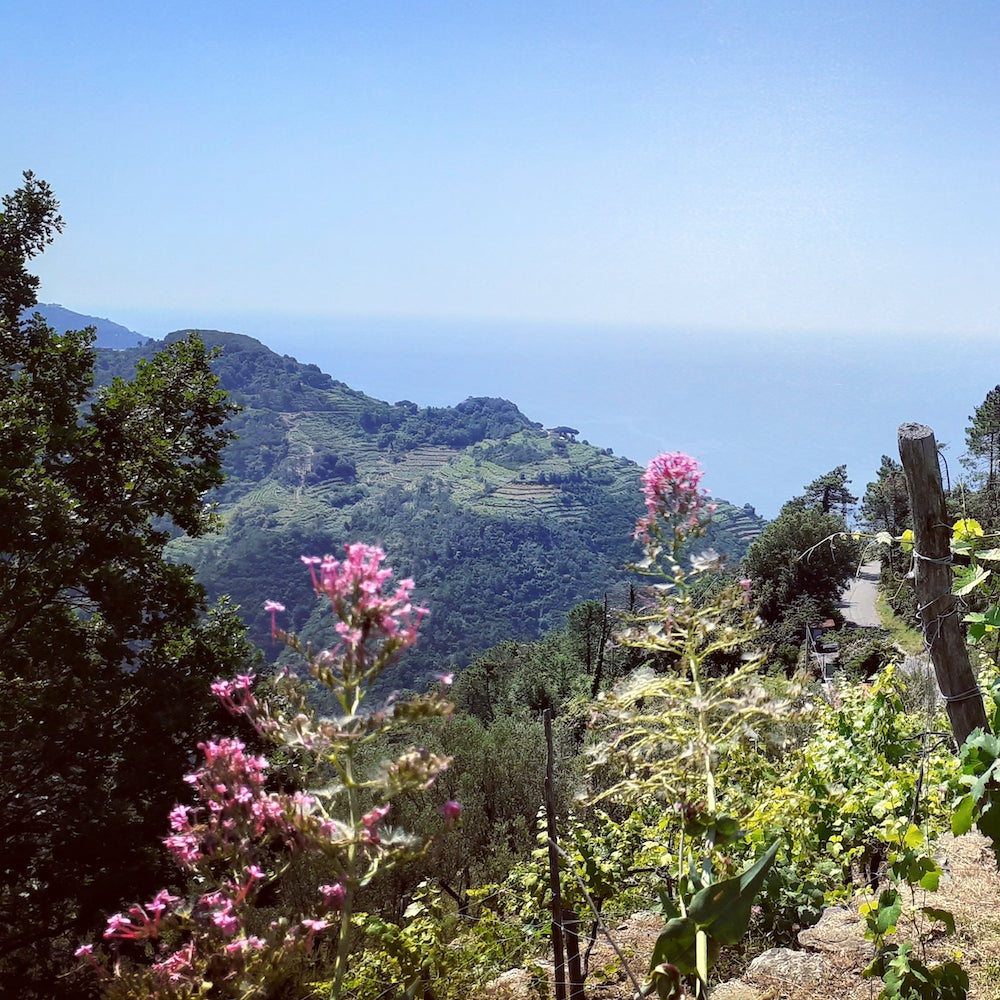
Cian du Giorgi Winery
Cinque Terre · Vernazza
Not to be missed: Cinque Terre Sciacchetrà
Primaterra
Cinque Terre · Riomaggiore
Wild Farm Cürnigia
Cinque Terre · Corniglia
Corniglia, Cinque Terre National Park. Local vegetables, lemons, olives and processed products from naturally grown raw materials. Wild Farm Cürnigia began in October 2020, started by Lorenzo and Gianpaolo, lifelong friends who grew up between Corniglia and Monterosso. During the first lockdown they put aside their post-graduation plans and their projects abroad. They began to clear and recover Lorenzo's mother's land, rebuilding the collapsed dry-stone walls, and from there they understood what they really wanted to do. The name comes from wild farming: an alternative to industrial agriculture that brings abandoned land back into use. Native crops are planted together, supporting the natural ecosystem and local food chains. On the recovered plots they grow several local vegetables and have restored old, forgotten olive groves. One of the main projects is a lemon grove of 200 trees on land abandoned for forty years, made with zeroCO2. To cope with drought, which in Corniglia also depends on a very old water system, the farm uses drip irrigation together with agroforestry systems. Tomatoes, aubergines, friggitelli peppers and onions grow under the lemon trees. The farm calls itself a "farm 2.0" and combines cultivation with experiential tourism. The aim is to let visitors experience local traditions and show an image of the Cinque Terre that is truer than the postcard one, even out of season. The project also includes a teaching garden and a farm with animals, open to schools, children and associations. From March to September the farm's workshop at San Bernardino, above Vernazza, can be visited.
Azienda Agricola Lucchi e Guastalli
Magra valley · Vezzano Ligure

Azienda Agricola Ottaviano Lambruschi
Magra valley · Castelnuovo Magra
In the mid-1970s, in the Lunigiana, between Liguria and Tuscany, working in the Carrara marble quarries meant a secure job. Ottaviano Lambruschi was a quarryman, but he had another idea in mind: to grow vines and make wine. At a time when everyone was leaving the countryside, he went against the current. He left the quarries and, with his severance pay, bought a piece of woodland at Costa Marina, on the hills of Castelnuovo Magra. He cleared it and turned it into a vineyard, planting the first Vermentino cuttings, with the help and enthusiasm of his brother Alessandro. The name Costa Marina says it all: from up there you can see the sea. That vineyard gave the farm's first wine, which is still its most representative today and one of the best-known crus of the Colli di Luni. In the 1980s his son Fabio joined the farm, with a diploma in agricultural science, and brought modern techniques into the cellar without giving up tradition. Later his daughter Ylenia arrived too, looking after sales. The farm has grown but has stayed a family business, deeply rooted in its territory. 80% of the vineyards are on hillsides, trained in guyot. The lower rows, with the youngest plants, give the Colli di Luni Vermentino. The higher ones give the two crus, Costa Marina and Il Maggiore. Costa Marina grows at 220 metres on stony soil of grey and red clays, rich in minerals. Beside the whites there is a red, Maniero, from Sangiovese, Merlot and Ciliegiolo. Ottaviano's story is that of someone who bet on the land when nobody believed in it. Choosing his wines means supporting a family that helped make the Vermentino of the Colli di Luni known.

Azienda Agricola Santa Caterina
Magra valley · Sarzana
Il Torchio
Magra valley · Castelnuovo Magra
Le Felce
Magra valley · Ortonovo

Luna Mater
Magra valley · Castelnuovo Magra
Terra della Luna
Magra valley · Casano

Dell'Erba Azienda Agricola
Savona area · Reg. Marixe
Dell'Erba is a small farm, recently founded, born from the meeting of family tradition and the wish of a new generation to make their territory known. It is led by young Giulia, together with her parents. The farm sits between sea and hinterland. The vineyards, about three hectares in two plots surrounded by woods, are in the Albenga plain, trained in guyot on red clay soil. The Taggiasca olive groves are in Lavina, a hamlet of Rezzo, at 600 metres in the Imperia hinterland, on terraces held up by dry-stone walls. Beside Pigato and Vermentino, the two white wines that symbolise the western Riviera, the farm grows Rossese di Campochiesa, also called Rossese d'Albenga. It is a rare variety, grown on very few hectares and different from the better-known Rossese di Dolceacqua, and here it becomes a rosé. In the cellar production is small and carefully made. The Pigato "Mareggio" takes its name from the storms that batter the coast, and the grapes are picked in two passes fifteen days apart, to get freshness and structure together. The Vermentino is called "Soffio di Ponente", the rosé "Rugiada". A sparkling Pigato and the Taggiasca extra virgin olive oil complete the range. For Dell'Erba the vineyard is also a meeting place: it hosts tastings at sunset among the rows and, every year, works by local artists displayed among the vines. Choosing Dell'Erba means supporting a young family that invests in the Albenga plain and looks after a rare grape variety.
Agricola di Valleggia Società Cooperativa Agricola
Savona and surroundings · Valleggia
In Valleggia, a hamlet of Quiliano, the cooperative Agricola di Valleggia has brought together since 1945 the producers of the Valleggia apricot, a Slow Food Presidium: thin orange skin, speckled with rust. It is one of the two cooperatives that protect the brand, together with about thirty growers.
Not to be missed: Albicocca di Valleggia

Altavia
Savona and surroundings · Savona
The name comes from the Alta Via dei Monti Liguri, the path that runs along the ridge of the whole of Liguria, from the Alps to the Apennines. It is a statement of intent: a beer that comes from the Ligurian mountains and carries their flavour. It all began in 2016 in Sassello, when four friends decided to recover an old chestnut grove to grow barley and hops. This is how the first farm brewery in Liguria was born. Today in Sassello there are about 4,000 square metres of hop field and barley fields, and the farm's hives supply the honey used in some recipes. The bond with the territory can also be felt in the labels. The most emblematic is Scau, a smoked beer made with malt smoked in the tecci of Calizzano and Murialdo, the small stone drying huts where chestnuts were dried for centuries. A farming tradition of the hinterland that comes back to life in an unexpected way. Since 2022 production has moved to Quiliano, one of the most wooded mountain municipalities in Liguria, right where the Alps give way to the Apennines. Here the brewery uses the light water of the springs of the stream of the same name. The quality is recognised: in 2018 Altavia was third emerging brewery at the Birraio dell'Anno competition and since 2019 it has always been among the 50 best Italian breweries according to Fermento Birra. Drinking Altavia means supporting mountain farming that recovers abandoned land and transforms the products of the Ligurian hinterland.
Augusto Vincenzo Besio
Savona and surroundings · Savona
In Savona, the Besio house has been candying chinotto since 1860, with a Maraschino recipe that has not changed over time. It is one of the last businesses still working the chinotto of Savona, a Slow Food Presidium: small, bitterish citrus fruits, kept in brine for three weeks before candying.
Not to be missed: Albicocca di Valleggia
Azienda Agricola La Vignetta
Savona and surroundings · Savona
In Savona, the farm La Vignetta grows and processes the products of its own land, using organic methods. A small, directly managed business, in the hills that rise from the city towards the Savona hinterland.

Le Riunite
Savona and surroundings · Savona
In Savona, the farming cooperative Le Riunite brings together the growers of the area: shops from Quiliano to Spotorno, zero-kilometre products and free agronomic advice for people who grow olives and vines. Among the seasonal offers there is also the Valleggia apricot, a Slow Food Presidium.
Not to be missed: Albicocca di Valleggia

Il Pianale — Agriturismo Cascina Cornelli
Erro valley and Sassello · Sassello
In the hills of Sassello, the Pianale farm raises Cabannina cattle, a Slow Food Presidium, together with lavender, cereals, fruit and vegetables, and produces honey. The agriturismo Cascina Cornelli welcomes guests with milking, visits to the bees and home-style Ligurian cooking.
Not to be missed: Razza bovina cabannina

Sede Storica Birrificio Altavia
Erro valley and Sassello · Sassello
In Sassello, in the Badani area, the Birrificio dell'AltaVia has been the first farm brewery in Liguria since 2016: it grows some of its raw materials before turning them into beer. It also sells at the Mercato Civico in Savona and at its operating site in Quiliano.
Agriturismo Ca' di Voi
Bormida valley · Calizzano
There is a Liguria that does not look at the sea but at the woods. It is made of small hamlets, scattered houses, chestnut groves, pastures and cool nights even in summer. It is here, among the forests of Calizzano, close to the Melogno beech wood, that Ca' di Voi began. The story starts well before 2004, when Marco and Silvana ran the Osteria del Borgo in Riofreddo, a hamlet of a few houses at 720 metres. In 2004 they bought an abandoned farmhouse and began a long restoration. Twenty years later that ruin has become an agriturismo, restaurant, farm and stable: proof that even a territory marked by depopulation can again give work and life. The farm's land stretches between the woods of Calizzano and Murialdo, at 750 metres above sea level. It is an area famous for chestnuts, a tradition so deeply rooted that it is protected by a Slow Food Presidium. Here the chestnut was for centuries the bread of the mountain, slowly dried in the tecci, the small stone drying huts. Ca' di Voi produces and transforms the fruits of its own land: the restaurant kitchen serves seasonal dishes, and the farm pantry offers sauces of the Ligurian tradition. Around the house there are an orchard, a vegetable garden, free-ranging farmyard animals and horses. The agriturismo is also an educational farm and riding centre, and paths set out from here that climb towards the summits and descend to the sea. Choosing Ca' di Voi means supporting those who decided to stay in the mountains, to farm them and to tell their story.
Not to be missed: Castagna essiccata nei tecci di Calizzano e Murialdo
Bar Pinotto
Bormida valley · Calizzano
Not to be missed: Castagna essiccata nei tecci di Calizzano e Murialdo
Birrificio Scarampola
Bormida valley · Millesimo
In Millesimo, the Scarampola brewery has made craft beer since 2008 in the former carpenter's workshop of the thirteenth-century abbey of Santo Stefano. Its own hops, chestnuts from the hinterland and Chinotto di Savona, a Slow Food Presidium, give rise to beers such as Scarampola n°8.
Elvio Bonino
Bormida valley · Cengio
In Cengio, in the Val Bormida, Elvio Bonino grows the moco, an old legume similar to the grass pea, with seeds as small as pebbles. A Slow Food Presidium since 2012, after the local Convivium found some seeds kept by the elders of the valley: Bonino is today the contact person for the producers.
Not to be missed: Moco delle Valli della Bormida
L'albero del Pane
Bormida valley · Murialdo
Not to be missed: Castagna essiccata nei tecci di Calizzano e Murialdo
Marco Bolla
Bormida valley · Cengio
In Cengio, in the Val Bormida, Marco Bolla is one of the growers who brought the moco back to life: a legume already grown in the Val Bormida in the Bronze Age, then almost lost. A Slow Food Presidium since 2012, it is sown by hand and threshed by hand after Ferragosto.
Not to be missed: Moco delle Valli della Bormida
Maria Sandra Negro
Bormida valley · Cengio
In Cengio, Maria Sandra Negro grows the moco of the Bormida valleys, a Slow Food Presidium: a hardy plant that needs no chemical treatments and grows even in the poorest soils. The seeds, as small as pebbles, are eaten in soup or ground into flour.
Not to be missed: Moco delle Valli della Bormida
Sant'Anna
Bormida valley · Cairo Montenotte
In Cairo Montenotte, the Sant'Anna farm, run by Alessandra Costa, grows the moco of the Bormida valleys: an old legume, almost vanished, now a Slow Food Presidium. It grows without chemical treatments on the poor tuff soils of the upper Val Bormida, between Cairo and Cengio.
Not to be missed: Moco delle Valli della Bormida
Santamaria
Bormida valley · Calizzano
Not to be missed: Castagna essiccata nei tecci di Calizzano e Murialdo · Albicocca di Valleggia
Terrazze Singhie
Bormida valley · Carcare
In Orco Feglino, Sara Polo and Mauro Migliavacca have farmed twenty-nine centuries-old terraces at three hundred metres above sea level since 2017, with the traditional chestnut-post support called ambrustin. Organic wine from lumassina, a native grape of the Savona area: the first bottle in 2018, then vermentino from 2020.

Azienda Agricola Parodi Alessandro
Finale Ligure area · Finale Ligure
Valle dell'Aquila, behind Finalborgo, Finalese. Chinotto di Savona (Slow Food Presidium), citrus and fruit of old varieties, jams, marmalades and handmade preserves. The farm lies behind Finalborgo, below Castel Gavone. All around once stood the estates of Count Giorgio Gallesio, one of the fathers of Italian fruit growing. It was founded in 1930 by grandfather Lorenzo Parodi and since 1995 has been run by his grandson Alessandro. It is still a family farm. The main crop is citrus: Pernambucco oranges, an old variety of western Liguria, lemons, citrons and kumquats. The most important product is Chinotto di Savona, which the farm has grown since 1930. Since 2004 it has belonged to the Slow Food Presidium. The Chinotto di Savona is smaller than a mandarin, has thin skin and no seeds, which makes it particularly good for candying and for jam. Beside the citrus the farm grows niche fruit and vegetables, hard to find in large-scale retail, following the seasons. These include Valleggia apricots, Albenga violet asparagus, trombetta courgettes, scorzonera, coscia pears, plums and cherries. The farm states that it does not treat the fruit and vegetables it grows. In the small family workshop in Finale Ligure, Mary and grandmother Stella make marmalades and jams. They use only the farm's own fruit, picked ripe on the plant and never refrigerated, so the products keep the bright colour of fresh fruit. They use little sugar, no preservatives and, instead of chemical thickeners, the natural pectin of the fruit. With the chinotto they also make mostarda, nectar, candied fruit and other specialities. The work follows the rule of the "3 Ps": passion, patience and top-quality products.
Not to be missed: Chinotto di Savona
Cooperativa fra Pescatori di Noli "Luigi De Ferrari"
Finale Ligure area · Noli
In Noli, the Cooperativa Luigi De Ferrari has brought together the fishermen of the gulf since 1941, heir to a mutual-aid tradition going back to 1909. The catch of the day, caught with small-scale fishing techniques protected by the Slow Food Presidium, is sold every morning on the Corso Italia seafront.
Not to be missed: Pesca artigianale del golfo di Noli

Valle Ponci
Finale Ligure area · Finale Ligure
Val Ponci, in the hinterland of Finale Ligure, about 4 km from the sea. Wines from Ligurian grape varieties, vegetable gardens and orchards grown with regenerative farming, agriturismo and restaurant. The Val Ponci is crossed by the ancient Via Iulia Augusta, of which several Roman bridges remain, and is dominated by the Rocca di Corno. To reach the farm you cross one of those bridges. The farmstead had already been saved from abandonment in the early 2000s by a family, who turned the old stables into rooms and the hayloft into a restaurant. In 2021 the farm was up for sale again. It was taken over by three friends, Gianluca Demarchi, Valentin Hehl and Pietro Valente, who had met in 2018 at the University of Gastronomic Sciences in Pollenzo, during a master's in Food Ecology. To avoid going into debt with the banks they divided the value of the farm into shares and offered them to people interested in bringing the valley back to life. About sixty members, mostly Swiss, bought a share. In return they receive credits to spend on stays and dinners, and they take part in the project. With the capital raised, the whole property was bought at the start of 2024. The five founders, that is the three young men, Matthias Hehl and Sabine Thuler, hold the majority. The property covers 50 hectares, 45 of them woodland. On the remaining 5 there are vineyards, vegetable gardens and orchards, grown with regenerative farming inspired by agroecology. No synthetic chemicals and no ploughing are used, and the soil is fed with compost, mulches and microbial teas. About one hectare is vineyard, split into seven plots on the sunniest terraces and surrounded by woodland. The grape varieties are those of Ligurian tradition: Pigato and Vermentino for the whites, Granaccia for the red. In the cellar the approach is minimal. The restaurant is open from April to early November and the menu changes often, following what happens in the fields. Most of the fruit and vegetables come from the farm. The rest comes from a network of local producers and craftspeople. Some evenings there is the "tavolata", a shared dinner where guests and staff eat together. Seven people work on the farm all year round.
Azienda Agricola I Formaggi Del Boschetto
Albenga plain · Albenga
Not to be missed: Toma di Pecora Brigasca
Azienda Agricola Montano
Albenga plain · Ceriale
Not to be missed: Asparago violetto di Albenga

Cantina BioVio
Albenga plain · Albenga
Bastia d'Albenga, Piana ingauna and Valle Arroscia. Riviera Ligure di Ponente DOC wines, Taggiasca monovarietal extra virgin olive oil, herbs, Albenga violet artichoke. Agriturismo and osteria. Since the early twentieth century the Vio family has grown herbs, Taggiasca olives and grapes, at first only for home use. In the 1980s Giobatta "Aimone" Vio and his wife Chiara joined the two farming traditions they came from. His family grew vegetables on the plain and sold them at local markets. Hers lived in the Valle Arroscia, among Taggiasca terraces and hillside vineyards. In 2000 the farm began to make and bottle all its own grapes. Today the farm covers 17 hectares divided into several plots along the Arroscia, between Bastia and Ranzo. On the plain they grow Albenga spiny artichokes and herbs, on the hills vineyards and olive groves. It has been certified organic since 1989, by ICEA. For the family it is a cultural choice: pesticides, herbicides and chemical fertilisers were never part of local tradition, and they simply carried on as people did before. The grape varieties are those typical of the western Riviera: Pigato, Vermentino, Rossese and Granaccia. The vines are on average about sixty years old and grow on mixed soils, partly loose and partly marl and limestone. Pigato is the flagship wine, made in three versions that show how different this grape can be. In 2017 Gambero Rosso named Aimone "Winegrower of the Year", the first time for a Ligurian producer. Today the farm is run by the founders with their three daughters: Caterina, who works in the cellar with her father, Camilla and Carolina. Besides wine and oil, BioVio packs fresh herbs every day, an activity it has carried on since the 1980s. Hospitality includes the agriturismo apartments, cellar visits with tastings, also in English, German and French, and the OrtOsteria Renè. Here Carolina cooks farmhouse dishes, mostly vegetarian, with products from the garden and the Piana di Albenga.

La Fattoria di Pol - Basilico
Albenga plain · Borghetto Santo Spirito
In Borghetto Santo Spirito a greenhouse has become a farm laboratory: the basil of the Fattoria di Pol grows without soil, in aeroponics, which makes it possible to follow it season after season without interruption. The choice comes from a practical problem for those who make pesto all year round: availability that comes and goes, uneven batches, changing quality. The leaves arrive without soil, ready to be processed.

Le Rocche del Gatto
Albenga plain · Albenga
Salea d'Albenga, western Riviera Ligure. Pigato, Vermentino, Rossese and Spigau Crociata, white wines with long maceration and great longevity. Le Rocche del Gatto is the farm of Fausto De Andreis, a unique figure in Ligurian wine, known as "the anarchist of Pigato". Fausto learned to love the vineyard from his father in the 1950s, as a boy. In the 1980s he worked as an electronics technician at Olivetti in Ivrea. In 1982 he decided not to wait for retirement to do what he really wanted, and founded the farm. The name pays tribute to his wife Caterina, who looks after very many cats. From the 2002 harvest the farm worked in partnership with Gigi Crosa of Vergagni and his daughter Clara, adding their vineyards and a few rented hectares. In 1995 a commission refused the DOC to his Pigato. Fausto answered by calling it "Spigau Crociata" and selling it as table wine. It was Spigau that brought him among the great independent Italian winegrowers. Fausto openly challenged production rules, tasting panels and the idea of the "vintage white", to be drunk young straight after bottling. The wines come only from Ligurian grapes. Technology is there, but it remains a support. Maceration on the skins is long: 7 days until 2010, 21 from 2012. It serves to draw out scent and minerality from Pigato and Vermentino. Fermentations start with native yeasts, chosen to avoid the standardised aromas of selected yeasts. The wines are neither filtered nor fined and rest for a long time before bottling. The result is golden, complex, long-lived whites, with notes of peach, apricot, citrus and Mediterranean herbs. The range includes Pigato, Vermentino and Rossese Riviera Ligure di Ponente DOC, Spigau Crociata and the red Macajolo.
Luca Ottone — Chinotto di Savona
Albenga plain · Pietra Ligure
In Pietra Ligure, Luca Ottone grows the Chinotto di Savona and is president of the Associazione per la tutela del Chinotto: the Slow Food Presidium that since 2004 has worked to save these small, bitter-sweet citrus fruits, grown only on the coastal strip between Varazze and Pietra Ligure.
Not to be missed: Chinotto di Savona

Soc. Agr. Enrico & Lanzalaco s.s.
Albenga plain · Albenga
Not to be missed: Asparago violetto di Albenga

PEQ Agri – Azienda agricola
Andora coast · Marina di Andora
Valle di Andora and western Liguria: Andora, Albenga, Imperia, Cervo, Tovo San Giacomo. Wines, Taggiasca extra virgin olive oil, vegetables, cheeses, honey, eggs and preserves. Shop, restaurants and hospitality. PEQ Agri presents itself as a "widespread" farm across western Liguria, born from the I LOVE AGRI project. The model joins farming, processing, catering and hospitality, with investment in renewable energy, natural growing techniques and a zero-waste policy. One of its stated aims is to give young people in the Ponente stable work, so that they do not have to leave: the company says it supports more than fifty families. Most of the land under cultivation has been recovered from abandonment. It was uncultivated and had often turned back into woodland. The reclamation work includes restoring dry-stone walls and managing water in the Andora valley. The wine comes from historic cellars acquired over time, each with its own brand: Lupi, Praié, Guglierame and Berry&Berry. The vineyards are mainly in Andora, Albenga and Imperia. At Colla Micheri, the medieval village on the Via Iulia Augusta where the ethnographer Thor Heyerdahl lived, stands the Praié cellar, surrounded by vines facing the sea. The supply chain includes other products too. The extra virgin oil is cold-pressed from hand-picked Taggiasca olives. The cheeses are made from Brigasca sheep and goat milk. The wildflower honey comes from hives scattered across the valley, mostly in Testico, and is extracted by hand. The eggs come from hens raised outdoors in the gardens of San Bartolomeo di Andora. In the farm's workshop, vegetables and fruit become preserves and jams, the grape pomace becomes grappa and the fruit becomes digestifs. Everything is available at the shop in Andora, where tastings are also held. The activities include the restaurant Vignamare in Colla Micheri, with a Michelin red and green star and the cooking of Giorgio Servetto, the Terrazza Praié with Sunday brunch, and the agriturismo in Tovo San Giacomo.
Not to be missed: Asparago violetto di Albenga · Cipolla belendina di Andora
Aglio Nero di Vessalico
Arroscia valley · Pieve di Teco
The Osvaldo Maffone farm grows garlic on its own land in Pieve di Teco, in the upper Valle Arroscia. Over time it has specialised in black garlic made from the local variety. The farm presents itself as the first to have produced Aglio Nero di Vessalico. It says it farms out of passion and with respect for tradition, and that it wishes to add other products of the territory in the future. Vessalico garlic is a variety typical of the upper Valle Arroscia. It takes its name from the fair held in the valley bottom, in Vessalico, documented as early as 1760. The bulb is compact and has about ten cloves on average. The outer layers are pinkish white, with red-violet streaks when freshly pulled, and the plant does not flower. The mild climate, between the Alps and the coast, and the soils of the valley give it an intense aroma, a delicate taste, high digestibility and a long shelf life. The fresh bulbs ferment for 30 days in a room with controlled humidity and temperature, without additives or preservatives. Then they oxidise for 45 days in a dedicated room. In the end the cloves are black and soft. They have a sweet flavour that recalls balsamic vinegar or soy sauce, without the pungency of fresh garlic, and leave a slight note of liquorice.
Azienda Agricola Bruna
Arroscia valley · Ranzo-Borgo
In the early 1970s Riccardo Bruna made a courageous choice for the Liguria of the time: he vinified and bottled the Pigato from the family's historic vineyards in Ranzo. In the village he was the first to do so. His father-in-law Virginio Capello, a farmer with an open, modern mind, supported him from the start and planted new vineyards in Ortovero. Since then Bruna has become a reference point for this grape. Pigato is a white grape of western Liguria, a close relative of vermentino but different in style. The name comes from dialect: the "pighe" are the small amber spots that appear on the berries. In the glass it is savoury, almost saline, with the scent of Mediterranean scrub herbs. The vineyards, about seven hectares between Ranzo and Ortovero, are all on terraces of dry-stone walls, among olive trees, oaks and shrubs of the hinterland, at 200–300 metres above sea level and about fifteen kilometres from the sea. From the beginning Riccardo gave up weedkillers and synthetic treatments. In 2011 the family took a further step and moved to natural farming on all the vineyards, choosing not to tie themselves to certifications. Today the farm is run by his daughter Francesca and her husband Roberto. In the cellar they ferment only with native yeasts and let the wines rest for a long time on their own lees. Beside the different Pigatos, which vary with the soil and the age of the vines, there are also a few reds. U Baccan, "the boss" in dialect, is dedicated to the founder and comes from the oldest vines. Choosing the wines of Bruna means supporting a family that for over fifty years has looked after Pigato and the terraces of the Valle Arroscia.
Azienda Agricola Daniele Ronco
Arroscia valley · Ranzo
To tell the story of this farm you have to go back to 1850. Even then Daniele's ancestors were producing and selling oil and wine, with olive groves scattered across the hills of the upper Valle Arroscia, in Ranzo, and of the upper Val Lerrone, in Casanova Lerrone. The oil was made in a small family mill, which was destroyed during the Second World War. In the early twentieth century, beside the olive trees, the family planted a small Pigato vineyard near Ranzo for their own use. It is the native grape that over time has become one of the emblematic wines of western Liguria. In 2012 Daniele, barely twenty, put his nautical diploma in a drawer and decided to make this inheritance his work. He founded the farm starting from extra virgin oil made only from taggiasca olives, and in 2014 the first bottled wines followed. Today the farm covers about seven hectares, mostly olive grove and about a hectare and a half of vineyard. The vines are all in Ranzo, between 350 and 500 metres above sea level, and they are the same ones that belonged to grandfather Cerrè and aunt Nini. He grows Pigato, Granaccia and Rossese, following the methods of the past and the slow pace of the vineyard. Three DOC Riviera Ligure di Ponente wines come from them: the organic Pigato, fresh and fruity; the Granaccia, a red that combines red fruit and Mediterranean scrub; and the Rosetum cru. Alongside the wines there is extra virgin oil, 100% taggiasca, cold-pressed by mechanical means only and unfiltered, and hand-selected olives in brine. Choosing the wines and oil of Daniele Ronco means supporting a young man who chose to stay in the hinterland and bring back to life the land and tradition of his family.

Azienda Vinicola Durin
Arroscia valley · Ortovero

Birrificio Scola Beaer - Naturalmente Scola
Arroscia valley · Castelbianco

Cornus
Arroscia valley · Rezzo
Rezzo, Valle Arroscia, Parco Naturale Regionale delle Alpi Liguri. Raw-milk cheeses, fermented vegetables, Cabannina beef, cured meats, honey. Agriturismo and farm osteria. Cornus was founded in October 2022 by Roberto Martini and Giulia Zappa, two young people from Sanremo who had trained in catering. Roberto went from high-level kitchens to the barn, and there he understood what he was really passionate about. They were looking for a place close to home, because they knew the area and its climate well, and they found it in Rezzo, where an agriturismo was for sale. The farm stands next to the Sanctuary, of which the two are now also keepers. The name joins "cor", heart, and "nus", mind. The centre of the project is raising the Cabannina cow, a native breed. It grazes well even on the steepest ground, helps to keep mountain pastures going and gives very good results both in cheese and in meat. There are also goats on the farm. The farm belongs to the Slow Food Presidia of the Cabannina cow and of the Prati Stabili. Cornus calls itself an "agrifermenteria". The cheeses are raw-milk, made with spontaneous cultures taken from the milk itself (lattoinnesto), and are hard to classify. For cheesemaking Roberto trained in Trentino and then with Irene Piazza, named best cheesemaker of 2023 by ONAF. On the farm they try to waste nothing. The whey is used to ferment seasonal vegetables to preserve them. The wood from clearing the pastures is used to bake bread. The meat comes from cows at the end of their working life, usually ten years old, and part of it is aged for over 90 days. Cured meats and honey complete the production. At weekends the farm osteria offers Roberto's cooking with the farm's products, while Giulia looks after the dining room.
Not to be missed: Razza bovina cabannina
aMaccia
Arroscia valley · Ranzo
Ranzo, Valle Arroscia, hinterland of Imperia. Ligurian DOC wines, single-variety Taggiasca extra virgin olive oil, agriturismo. aMaccia is a farm with an agriturismo in Ranzo, a small farming village in the Valle Arroscia. It lies 15 km from the sea and 20 km from the mountains of Monesi. The name, in Ligurian dialect, means "the scrub" and recalls the farm's plots, scattered like leopard spots across the hills. The farm was founded in 1850 by Giovanni, a lover of good company and of good Pigato. Since then it has passed through four generations of women: his daughter Elisabetta, then Fernanda, Loredana and today Carlotta, who runs it with her partner Fulvio. The land covers 12 hectares, almost all vineyard and olive grove, set in Mediterranean scrub. The vines are the most typical of western Liguria: Pigato, Ormeasco, Vermentino and Rossese, all vinified in the farm's cellar. Two types of Pigato are made, together with Vermentino, Rossese, Ormeasco and Ormeasco Sciac-trà. The farm says it follows modern winemaking techniques, with respect for tradition and territory. The single-variety Taggiasca extra virgin oil comes from century-old olive groves in Ranzo. Harvesting is still done with the help of the farm's donkeys. The agriturismo has four independent apartments overlooking the Arroscia stream, with a terraced garden of dry-stone walls. The farm organises wine and oil tastings and guided walks on the paths between vineyards and olive groves. Guests can take part in the grape harvest and the olive harvest.
Az.Agricola VisAmoris
Imperia and surroundings · Imperia
Imperia, in the hinterland of western Liguria, about 3 km from the sea. Pigato in several versions, including sparkling wines made by the classic and ancestral methods. VisAmoris was born in 2004, almost by chance, more from a turning point in life than from a farming plan drawn up at a desk. The first wine was Domè, a Pigato from a vineyard of 2,500 square metres on three terraces. The results were encouraging, and the farm grew little by little by buying small plots in the same area, abandoned for over thirty years. Overgrown land was cleared and the dry-stone walls rebuilt. The two brothers who founded it had no experience of wine. For this reason they approached the vineyard without preconceptions and with great respect for nature. Later one of the sons, Simone, graduated in Viticulture and Oenology at the University of Turin, at the Alba campus, and brought new skills to the farm without changing its philosophy. Today the vineyards cover about 6 hectares, spread over several places in the Imperia hinterland, on mostly clay soils with schistous rock. Farming is organic: the vines are fertilised with worm humus and green manure, and treated with sulphur, copper and natural substitutes for copper. Production ranges from 25,000 to 30,000 bottles a year, but it depends a lot on the vintage. In 2023 the rains cut it to about 10,000. The main wine is Pigato, offered in nine different labels. All the wines ferment spontaneously and are neither fined nor filtered. They are vinified in temperature-controlled barrels, in a concrete tank from 2018 and in a small barrique cellar. VisAmoris was among the first farms to make sparkling Pigato. To learn the classic method the founders went to France, and today they also make sparkling wines by the ancestral method. It was the first farm in Liguria to obtain FIVI certification, in 2007–2008, which guarantees that the wines are made only from grapes grown on the farm's own land and vinified on the farm.
Azienda Agricola Maria Donata Bianchi
Imperia and surroundings · Diano Arentino
The story begins more than forty years ago with a law student who had another passion: wine. Maria Donata Bianchi asked Pietro Trevia for advice on wines and vineyards, and then met his son Emanuele. Wine brought them together, and together they founded the farm: the first bottling was in 1977. Today in the cellar is Marta Trevia, the fourth generation of a family tied to the vineyard. After classical studies and studies in oenology, a period in Germany and internships in Piedmont and New Zealand, she returned to Diano to combine home tradition with what she learned elsewhere. The vineyards cover about four hectares on the hills behind Diano Marina, with Pigato, Granaccia and Syrah, and above all Vermentino in Diano Castello, an area long suited to it. Here the bond with this grape is so strong that every year there is a keenly followed contest for the best Vermentino in the village. The label of the farm's Vermentino reproduces an old 1850 print of Diano Marina and Diano Castello. From old-vine Vermentino comes Antico Sfizio, which has a short maceration following local custom. The Pigato, followed by Marta since 2014, joins three different vinifications in a single wine. Since the early 2000s the family has also planted Granaccia and Syrah, which give two reds: Bormano, in steel, and La Mattana, aged in wood in the best vintages. In Valcrosa, among olive trees and vineyards, there is also the family agriturismo. Choosing the wines of Maria Donata Bianchi means supporting a family that for four generations has looked after the grape varieties of the western Riviera with respectful viticulture, attentive to the territory.
Birrificio Nadir
Riviera dei Fiori · Sanremo
Tenuta Selvadolce – Aris Blancardi
Riviera dei Fiori · Bordighera
Hills of Bordighera, in the far west of Liguria, a few kilometres from France. Wines from Vermentino, Pigato, Rossese and Granaccia, grown biodynamically. Selvadolce stands in one of the most scenic areas above Bordighera, facing the sea, where the Riviera sun is tempered by a steady breeze and sometimes by the mistral wind. For over a century the Blancardi family grew flowers, the traditional trade of the Riviera dei Fiori. Then competition from intensive growing in other countries put the sector in difficulty. Aris, registered as Aristide, was a horse vet and had studied in Boston. In the early 2000s he suddenly found himself running the family farm and began to look for different ways of farming. During viticulture and horticulture courses he came across the biodynamics of Nicolas Joly. He came home with one certainty: Selvadolce would become a biodynamic farm. The conversion began in 2004. He came to making wine almost by chance, he who before did not even drink it. The first vintage came out in 2007. The estate covers about 7 hectares. The vineyard, planted in the mid-1970s by his grandfather, is surrounded by centuries-old olive trees, dry-stone walls and bougainvillea. The varieties are those of the western Riviera: Vermentino and Pigato for the whites, Rossese, Granaccia and Ormeasco for the reds. In the vineyard no herbicides or fertilisers are used, and there is no irrigation even in the hottest summers. To protect the plants only small amounts of quarried sulphur and copper are used, together with biodynamic preparations 500 and 501, which rebuild soil fertility. The wines are neither fined nor filtered and are made with minimal intervention in the cellar. They are much appreciated in the natural wine world, abroad too. The labels include Selvadolce Bianco and Crescendo Bianco. The estate can be visited and Aris welcomes in person anyone who wants to learn about biodynamics and taste the wines.

Azienda Agricola Vittorio Cassini
Crosia valley · Perinaldo
Not to be missed: Carciofo di Perinaldo
Il Carciofo
Crosia valley · Perinaldo
Not to be missed: Carciofo di Perinaldo

Ka' Mancine di Repaci Roberta
Crosia valley · Soldano
La Vecchia Distilleria
Crosia valley · Vallebona
Not to be missed: Acqua di fiori di arancio amaro
Agriturismo Ca' De Nadi
Nervia valley · Pigna
Buggio is a small village of medieval origin in the upper Val Nervia, at the edge of the Parco delle Alpi Liguri, where the mountains look at the sea. Here, in a farm manor house from the early twentieth century surrounded by vegetable gardens, stands Ca' de Na. It is a young farm that focuses on organic products of its own making, and that holds together farming tradition and respect for the environment. What is grown is what is brought to the table. The value of Ca' de Na lies in the biodiversity it looks after. The farm grows the Pigna white beans, an old legume of the valley protected by a Slow Food Presidium. It also keeps the black bee of western Liguria, a native bee adapted over centuries to these mountains, also a Slow Food Presidium, from which it makes its honey. Taggiasca extra virgin olive oil, jams, and seasonal fruit and vegetables complete the production. In the kitchen the Ligurian tradition meets the Provençal one, as is natural a few kilometres from the border. Among the signature dishes is gran pistau, an old recipe of crushed wheat cooked slowly, alongside coniglio alla ligure and ravioli made to the village's traditional recipe. Ca' de Na is also an educational farm, with goats, bees and many species of birds, and a starting point for excursions among the canyons of the valley and the Alta Via dei Monti Liguri. Choosing Ca' de Na means supporting those who save local breeds and varieties and bring them back to the table.
Not to be missed: Ape nera del Ponente ligure
Alpagan
Nervia valley · Pigna
Among woods and olive groves, at 550 metres in the heart of the Val Nervia, Al Pagan looks towards the Toraggio and Pietravecchia massifs. It is about twenty kilometres from the sea but already in the mountains, a few steps from the Alta Via dei Monti Liguri. It is an organic farm that grows olives, vegetables and green foliage. From the land come oil and olives in brine, fresh vegetables and above all dried beans. The signature product is the Pigna white bean, a Slow Food Presidium. It is grown only on the dry-stone terraces of Pigna and Castelvittorio, where it finds the lime-rich water and well-drained soil it needs. It is sown in June, harvested in September when the pod is dry, then shelled and left to finish drying in the sun, outdoors, as it has always been done. The result is a bean of slightly pinkish colour, with a soft flesh and a very thin skin. Growing it means keeping alive not only a variety but also the terraces that host it: a landscape of dry-stone walls that without farming would return to woodland. Al Pagan is also a starting point for those who want to get to know the valley on foot or by mountain bike, between the Toraggio, Cima Marta and the Valle delle Meraviglie.
Not to be missed: Fagioli di Badalucco, Conio e Pigna
Azienda Agricola Bolognesi Marco
Nervia valley · Pigna
The farm officially began on 1 April 2010, but its story starts much earlier, on the land the Bolognesi family has farmed for generations between Pigna and Castelvittorio. The starting point was the Pigna white bean, a Slow Food Presidium, of which at first only a few tens of kilos were produced. Beside it were the olive trees, handed down from father to son. The Pigna bean arrived in Liguria in the seventeenth century from Spain, by way of Provence, and for over three hundred years it has been grown between Pigna, Buggio and Castelvittorio. It grows on the dry-stone terraces of the hinterland, in the highest spots, where the soil drains well and the water comes from springs, rich in lime and minerals. It is a fleshy, delicate bean with a very thin skin. The signature dish of Pigna is capra e fagioli. Year after year the farm has grown. Today the beans cover about 3,500 square metres, which in winter give way to seasonal vegetables. There are also about 5,000 square metres of olive grove, with 120 taggiasca trees that give the extra virgin oil, and a small summer vegetable garden. Since 2015 Marco has belonged to the consortium of the Lavanda della Riviera dei Fiori, which protects and promotes this traditional crop. He planted the officinal lavender variety "Imperia" and was the first to make a fine essential oil from it. Today there are about 1,500 plants, grown at about 750 metres above sea level. Distillation is done on the farm, in a still made entirely of copper. The same still also produces the essential oils of rosemary, eucalyptus, sage, thyme and bay, as well as St John's wort oil. In summer, at the Festa della lavanda in Pigna, Marco shows how distillation is done. Choosing the products of Marco Bolognesi means supporting someone who keeps alive the terraces of the upper Val Nervia and an old legume that risked disappearing.
Not to be missed: Fagioli di Badalucco, Conio e Pigna
Elida Rebaudo — Fagioli di Castelvittorio
Nervia valley · Castelvittorio
Not to be missed: Fagioli di Badalucco, Conio e Pigna
Elisa Ferrari — Fagioli di Dolceacqua
Nervia valley · Dolceacqua
Not to be missed: Fagioli di Badalucco, Conio e Pigna
Gabriella Dolza — Fagioli di Pigna
Nervia valley · Pigna
Not to be missed: Fagioli di Badalucco, Conio e Pigna
 Terre Bianche
Nervia valley · Dolceacqua
Dal 1870 la famiglia Rondelli coltiva il Rossese sulla collina di Arcagna, sopra Dolceacqua, su un suolo bianco raro in Val Nervia: è da lì che viene il nome. Oggi l'azienda è guidata da Filippo Rondelli e Nicola Laconi, con vigneti certificati biologici, niente diserbanti né plastica tra i filari, e la cura dei muretti a secco che reggono le fasce. Nel 1972 la famiglia fu tra i fondatori della DOC Rossese di Dolceacqua, la prima della Liguria, e tra il 2011 e il 2014 Filippo ha lavorato alla zonazione delle Nomeranze, i cru del Rossese. Tra le vigne ci sono anche quattro appartamenti di agriturismo.

Testalonga
Nervia valley · Dolceacqua
Dolceacqua, Val Nervia, in the far west of Liguria. Rossese di Dolceacqua DOC and Bianco Testalonga from Vermentino grapes. Antonio "Nino" Perrino began working as a winegrower in 1961, at fifteen, when he asked his father to let him leave school to work in the vineyard. His father died six years later, and Nino carried on the farm with his mother Mariuccia, who helped him until she was almost ninety. Today he works with his niece Erica, who left her job to join him full time in the vineyard and the cellar. In 2021 Testalonga celebrated its sixtieth harvest. Nino is considered perhaps the first producer of Rossese di Dolceacqua and one of the truest interpreters of this grape. The vines cover about two hectares on steep terraces in the Arcagna and Casiglian areas, above the village. They are among the oldest in the area and some plants are over a hundred years old. Beside the vines there are very old olive trees. The method has stayed the same for more than half a century. In the vineyard everything is done by hand, with minimal treatments of sulphur and copper. The cellar is a garage in the centre of Dolceacqua. The grapes are trodden by foot without destemming, ferment spontaneously with native yeasts and without temperature control, and age for at least a year in old 500-litre oak barrels. Nino does not like the label "natural wine": he says this is how he has always made wine. The Rossese macerates on its skins for about 18 days. It is a fresh, Mediterranean red, with scents of cherry, red fruit and scrubland herbs and a peppery finish, and it ages very well. The Bianco Testalonga is a Vermentino macerated for a few days on its skins, savoury and mineral. Few bottles are made and enthusiasts look for them. Nino invites those who buy his wines to visit the vineyards with him, because wine is better understood when you see the land it comes from and the people who make it.
A Trincea
Roia valley · Airole
Above Airole, one of the last villages of the Italian Val Roia, there is a mountain that twenty years ago had turned back into woodland: of the old vineyards only a few abandoned vines remained. Since 2000 Dino Masala, with the help of his family, has cleared it and rebuilt the terraces by hand, using only local stone. The heart of the project is Roccese, a native grape that risked disappearing and that winemakers consider the "father" of Rossese. Its name speaks of a Ligurian way of growing vines documented since the thirteenth century: the vine planted among the rocks. To bring it back to life, Dino spent years studying century-old vineyards by then abandoned. In the vineyard the work is done as it used to be. No pesticides or chemical fertilisers are used, the plants are never irrigated and the soil is fed with organic matter from the undergrowth. Every year the surface roots are removed, so the vine is forced to go deep to look for water in the summer months. The result is a niche production that expresses the territory it comes from. Beside the vines grow taggiasca olive trees, from which the farm makes its extra virgin oil. From the fresh pomace it also distils "aigavite", the grappa-style spirit that every family once kept jealously at home. A Trincea is also a guardian of the landscape: the rebuilt dry-stone walls have become a sign of identity for the whole village. On the farm you can visit a small rural house that still keeps the furnishings of farming life a few decades ago. In 2013 Vinitaly awarded Dino Masala as "Viticoltore benemerito della Liguria".
Azienda agricola Sismondini Danila
Roia valley · Sealza
Not to be missed: Fagioli di Badalucco, Conio e Pigna
Le Api di Airole
Roia valley · Airole
Not to be missed: Ape nera del Ponente ligure

Deperi – Azienda Agricola Paolo Deperi
Oltregiogo · Caneto
Ranzo, Valle Arroscia. Pigato, Vermentino, Ormeasco di Pornassio, Pigato Metodo Classico and Taggiasca extra virgin olive oil. The Deperi family has grown vines and olives in Ranzo since the early decades of the nineteenth century. The founder was Clemente. The step forward came in 2004, when Paolo Deperi, with the support of his father Pierluigi and his uncle Mauro, built a modern cellar. The first Pigato under the family name dates from 2008. Then came Ormeasco and Vermentino. Today Paolo runs the farm with his father and the young winemaker Andrea Magliano. Production comes from three areas with very different microclimates. In Ranzo, where the cellar is, the hills and soils bring out the best in Pigato. The Tenuta Colombera has two hectares of Vermentino facing the sea, between Alassio and Albenga. In Rezzo the family owns the castle of the Marchesi di Clavesana. At the foot of the castle it has planted vineyards of Ormeasco, the grape the Clavesana imposed on Rezzo at the end of the thirteenth century, from which Ormeasco di Pornassio DOC is made. In the dungeons of the same castle the Metodo Classico Deperi ages, made only with Pigato grapes. It is a pas dosé with fine, lasting bubbles, scents of citrus, flowers and bread crust, and a marked acidity that suits raw fish and seafood. In 2014 it entered the Golosaria Top Hundred, the only wine of western Liguria in that selection. The farm is among the leaders of the Ligurian sparkling wine movement. The range also includes Pigato Cremen, made in French oak barrels. The farm is one of the cellars of Ranzo, a village in the Valle Arroscia known for Pigato, Vermentino, Rossese and Ormeasco.
La Sereta
Oltregiogo · Fraconalto
Not to be missed: Sciroppo di rose
Antonia Dufour
Gavi and Novi hills · Gavi
On the hills of Gavi, at the entrance of the house in Vallegge, there is a gate of wrought iron, forged by hand in the fire as was done in the past. From the top of it Antonia Dufour took the logo of her farm. It is a symbol: openness to real, healthy and good products, and closure to everything that is mere appearance. The heart of the farm is the old roses, grown without any chemical treatment, on either the plants or the flowers. They are fragrant varieties, far from the modern roses selected for their looks, and they are the raw material of everything that comes out of Vallegge. The petals are used to make rose syrup, one of the oldest and most characteristic preparations of the Genoese tradition and of the Apennines between Liguria and Piedmont. It used to be made at home in spring, when the roses were in full bloom, and kept all year: diluted in cool water in summer, or used as a remedy and as a sweet. Beside the syrup come rose creams and rose water, valued for its refreshing and soothing properties. The farm is a regular presence at the gardening shows of the area and at Euroflora. Choosing the products of Antonia Dufour means supporting someone who looks after old roses and a recipe that risked remaining only a family memory.
Not to be missed: Sciroppo di rose

Rocco di Carpeneto
Ovada hills · Carpeneto
Lidia Carbonetti and Paolo Baretta worked for years in Milan's finance world, until they decided to give shape to a dream: to live away from the city, in a more natural way, with wine at the centre. They fell in love with a partly restored farmhouse on the hills of the Alto Monferrato around Ovada, surrounded by old vines of Dolcetto, Barbera and Cortese. The previous owners had sold part of the grapes to cooperative cellars and kept part for themselves. Lidia and Paolo saw straight away that there was a heritage to bring out. Rocco di Carpeneto stands on a small plateau at 280 metres, among hills where vines dominate but are not a monoculture. It is the part of Piedmont closest to the Mediterranean. The vineyards were planted between 1955 and 1986 and hold only native varieties: Cortese, Barbera, Dolcetto, Freisa and Nebbiolo, as well as Albarossa, a cross between Barbera and Nebbiolo created in 1938. The vines are farmed organically, with attention to biodiversity and to the natural system as a whole. In the cellar the wines are strictly natural. Fermentations are spontaneous, with native yeasts only, and macerations are long. Different rows and vineyards are vinified separately, and human intervention is kept to a minimum, because healthy grapes need no correction. Some wines also age in amphora. The heart of the project is the Dolcetto di Ovada. Here, they remind us, the ampelographer Gallesio already considered in the nineteenth century that Dolcetto gave its best. For years, however, the area was associated with bulk wines made for quantity. Together with a small group of winegrowers, Lidia and Paolo brought the Ovada DOCG consortium back to life, preferring the name of the place to the name of the grape in order to tie the wine to its territory. An example is Steira, an Ovada from a vineyard more than forty years old. Choosing Rocco di Carpeneto means supporting people who saved old vines from abandonment and who give back dignity to a wine and a territory that have long been undervalued.
Az. Agr. Molino Moretti
Alta Langa and Monferrato · Spigno Monferrato
In Turpino, a small village on the clay badlands around Spigno Monferrato, the Moretti family has farmed its own land for generations. It is a particular landscape, marked by rock formations that in dialect are called "tuvu", and it is here that the farm chose its path: the old Piedmontese varieties of maize. These are maizes that intensive farming had set aside, replacing them with more productive hybrids that have no history. The Moretti family selected them and brought them back to the fields with patience, making them the heart of their production. The Associazione Antichi Mais Piemontesi guarantees this work: it protects these varieties and certifies their origin and processing. The harvest is ground in the farm's small mill with stone mills, which turn slowly and keep scent and flavour. From it come flours that bring back to the table flavours almost forgotten. Besides maize, the farm grows other cereals and legumes such as chickpeas. Since 2013 the whole chain has been closed at home: the flours become handmade baked goods, cooked in the wood oven. From field to mill to oven, everything passes through the hands of the family. Choosing Molino Moretti means supporting those who save the biodiversity of cereals and the old knowledge of stone milling.
Not to be missed: Moco delle Valli della Bormida

Amamaja
Parma Apennines · Albareto
Giulia and Simone call themselves custodians of the Amamaja farm, in San Quirico di Albareto. They retrace the steps of their grandparents, sharecroppers and farmers who got everything they had from the land and the animals. On the farm there is a synergistic vegetable garden, ancient grains sown every two or three years, hens and laying hens scratching about, a few pigs free-ranging in an oak wood. But the biggest part of the day goes to the dairy cows, and in particular to the cabannine: an endangered breed they have fallen in love with.
Not to be missed: Razza bovina cabannina
A Resta Società Cooperativa Agricola
Other areas · Lenzari
In dialect the "resta" is the braid of garlic, and from it takes its name the cooperative that looks after one of the most characteristic products of the Ligurian hinterland. Vessalico garlic has come down to us thanks to a few stubborn farmers, who grew it in small mountain fields and passed on from one generation to the next the bulbs and the knowledge to grow and braid it. In 1999 a group of small producers founded A Resta to save this old garlic from the pressure of intensive farming. The following year the Slow Food Presidium was born, the first in Liguria. Cultivation is entirely by hand and organic. The mild climate of the valley, between the Alps and the sea, and the suited soils give a garlic with an intense aroma but a delicate taste, very digestible and able to keep for a long time. The heads are not pulled from the plant: after drying they are chosen by size and braided in pairs. The work is done only in the morning and in the evening, when the leaves are damp and do not break, so the garlic stays sound and fragrant eight to ten months after the harvest. Every 2 July, as since the eighteenth century, Vessalico hosts the Fiera dell'aglio: the producers come down from the valley with the reste and sell them in the village square. Besides garlic, the cooperative makes Taggiasca extra virgin oil, jams, hazelnuts, walnuts and Vessalico garlic cream.
No producers match these filters.
Try removing one, or searching for another word.
Someone missing?
This map is not finished and never quite will be. If you know a producer who belongs here, tell us: we will go and see.
Suggest a producerMap: © OpenStreetMap contributors.

